
Inspections
What actually gets checked during a fire door inspection
A fire door only performs if every component performs. Here is what an inspection covers, and why each check matters when a door is asked to hold back fire and smoke.
· Paragon Group NW
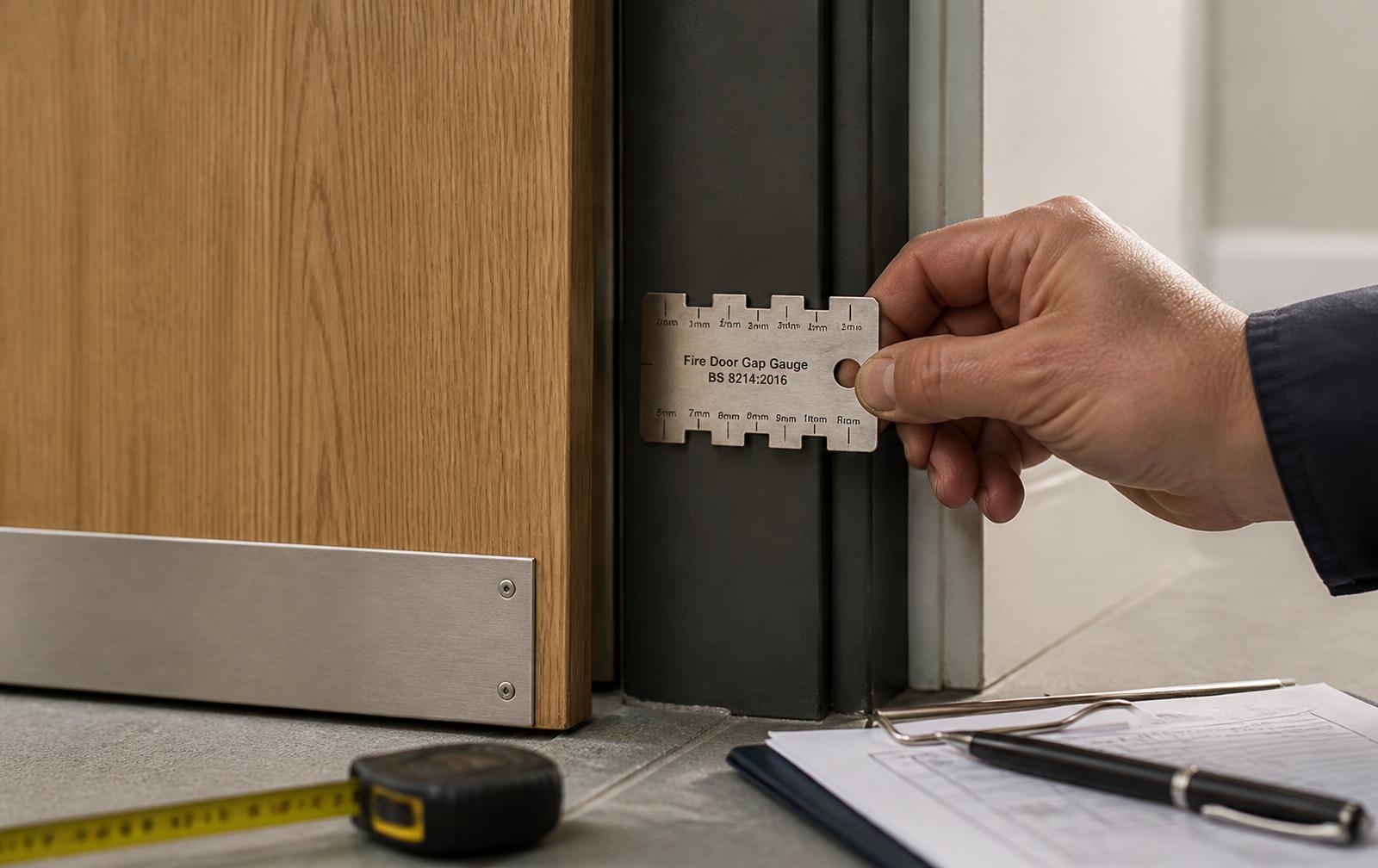
Gaps around the leaf
Gaps between the door leaf and frame are usually measured at around 3mm, with the threshold gap assessed against the door's specification. Too tight and the door binds; too wide and smoke passes before the intumescent seal has a chance to activate.
Seals and smoke brushes
Intumescent strips expand under heat to close the gap; cold smoke seals deal with the smoke that kills long before flame arrives. Both are checked for continuity, damage, paint contamination and correct fitting into the groove.
Hinges and ironmongery
- Correct number of fire-rated hinges, usually three, all firmly fixed
- No missing or incorrect screws
- Locks, latches and handles operating cleanly
- Any fitted hardware appropriate to a fire door
The closer
A self-closing device must close the door fully from any angle and engage the latch. A closer that stops short of the frame is one of the most common and most serious defects we record.
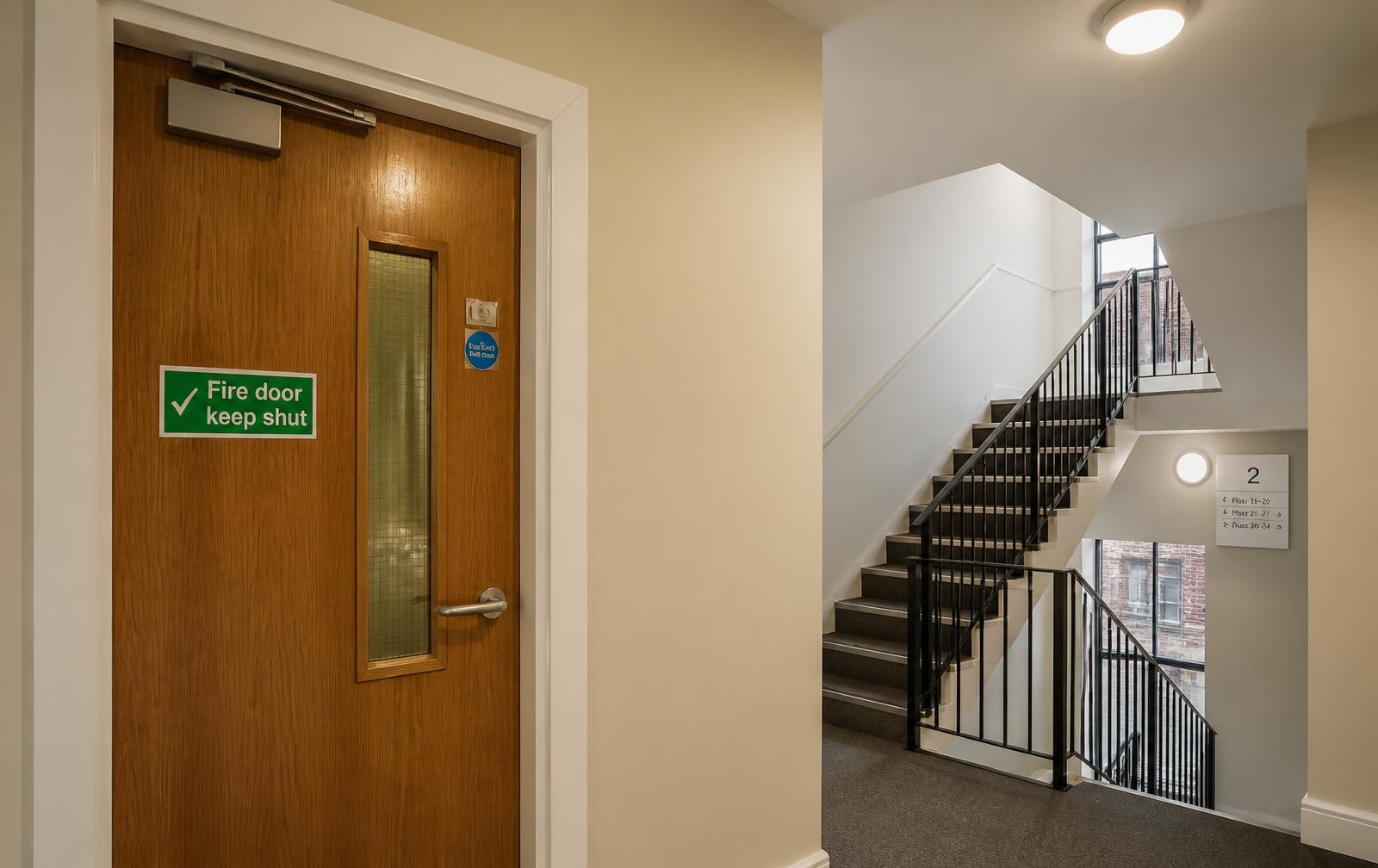
Glazing, signage and the leaf itself
Vision panels must be fire-rated and correctly beaded, signage must match the door's function, and the leaf is checked for damage, unauthorised holes, added fixings and any alteration that undermines certification.
What you receive afterwards
Each door gets a recorded condition, photographs and a prioritised list of any defects, so remedial works can be planned with a clear view of what is urgent and what can be scheduled.